Tiny Satellites, Big Discoveries: NASA’s PREFIRE Mission
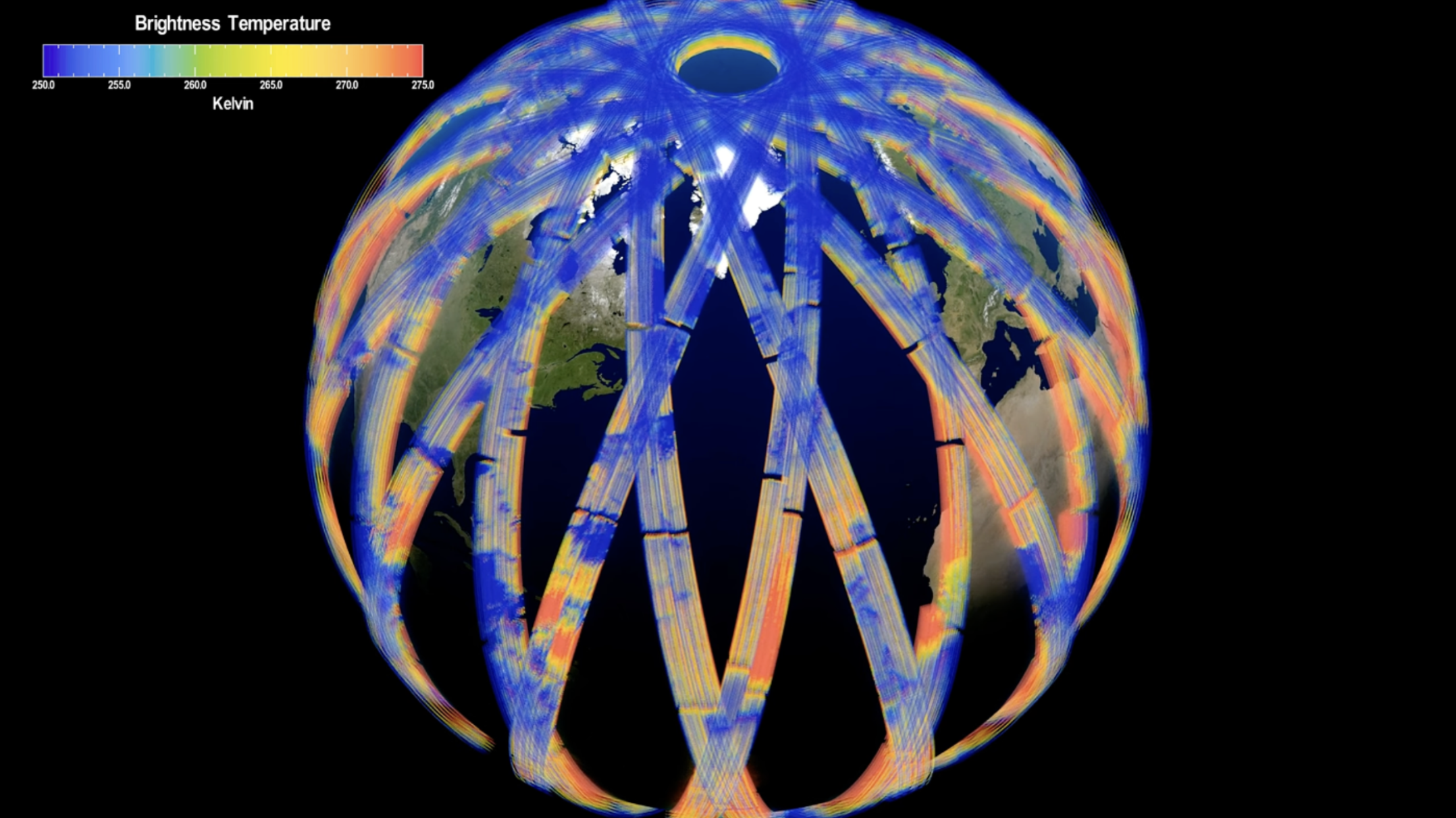
Data from NASA’s PRESET CubeSats (NASA’s Scientific Visualization Studio). Brightness temperature is the intensity of infrared emissions, where red indicates more intense emissions and blue indicates less intense emissions. This data will help researchers better understand climate regulation by the global poles.
This month’s blog post will explore the science and innovation behind NASA’s Polar Radiant Energy in the Far-InfraRed Experiment (PREFIRE).
The Science
The Arctic and Antarctic regions, known for their cold temperatures and remote locations, reflect back to space much of the radiation that’s absorbed by Earth’s surface (NASA, n.d.). Earth absorbs a large amount of heat at the tropics, which is then transported by winds and ocean currents to the poles where ice, snow, and clouds radiate it back into space (NASA, 2025). This balanced heat exchange is what drives Earth’s weather and climate. Almost 60% of outgoing polar heat is in the far-infrared range, meaning radiation with a wavelength longer than 15 micrometers (L’Ecuyer et al., 2025). Despite its importance, this portion of Earth’s energy budget has never been systematically measured until now.
The Mission
PREFIRE is the first mission designed to measure this elusive far-infrared radiation escaping from Earth’s poles (NASA, 2025). By tracking when, where, and how much of this energy is emitted, PREFIRE is helping scientists understand how water vapor and clouds trap heat and shape the greenhouse effect (NASA, n.d.). In short, it’s helping us fill in a massive blind spot in our understanding of how Earth keeps cool.
The CubeSats
The PREFIRE CubSats are two cube-shaped satellites, each about the size of a shoebox (NASA, 2025). Launched in May and June of 2024, these satellites carry technologically advanced, miniature optical spectrometers that are 10 times more sensitive to infrared wavelengths than any previous instrument (L’Ecuyer et al., 2025). These spectrometers measure radiation between 5 and 54 micrometers, a range that encompasses about 95% of all the heat Earth emits into space. Think of them as precision thermometers orbiting the planet, mapping how the poles release heat into space.
The Impact
Already, PREFIRE has revealed that the amount of far-infrared radiation escaping into space can vary by up to 5% between different types of ice (NASA, 2025). That small difference can have big implications for how we model melting, weather, and storm formation. By integrating this missing data into weather and climate models, researchers will be able to improve forecasts, better understand the circulation of moisture across the globe, and gain insight into how storms form. Data collected by PREFIRE will also be used to predict how ice, seas, and weather will change in response to a warming planet.
The tiny but mighty PREFIRE CubeSats are finding the missing piece of Earth’s energy story. Sometimes, the biggest climate insights come from the tiniest spacecraft.
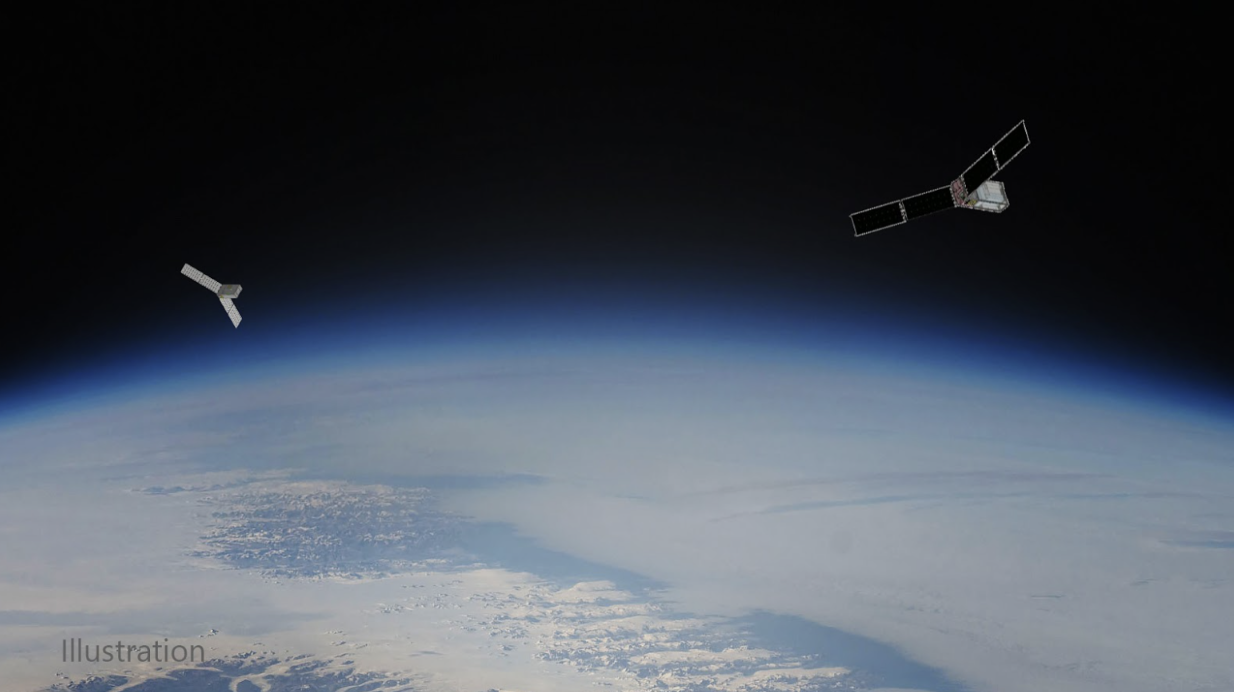
Artist’s rendering of NASA’s PRESET CubeSats (NASA).
References
L’Ecuyer, T. S., Drouin, B. J., Anheuser, J., Grames, M., Henderson, D. S., Huang, X., Kahn, B. H., Kay, J. E., Lim, B. H., Mateling, M., Merrelli, A., Miller, N. B., Padmanabhan, S., Peterson, C., Schlegel, N.-J., White, M. L., & Xie, Y. (2021). The Polar Radiant Energy in the Far Infrared Experiment: A New Perspective on Polar Longwave Energy Exchanges. Bulletin of the American Meteorological Society, 102(7), E1431–E1449. https://doi.org/10.1175/BAMS-D-20-0155.1
NASA. (n.d.). Prefire. NASA Jet Propulsion Laboratory (JPL). Retrieved October 16, 2025, from https://www.jpl.nasa.gov/missions/prefire/
NASA. (2025). NASA’s PREFIRE satellites reveal a secret glow escaping from our planet. ScienceDaily. Retrieved October 16, 2025, fromhttps://www.sciencedaily.com/releases/2025/08/250817055324.htm
