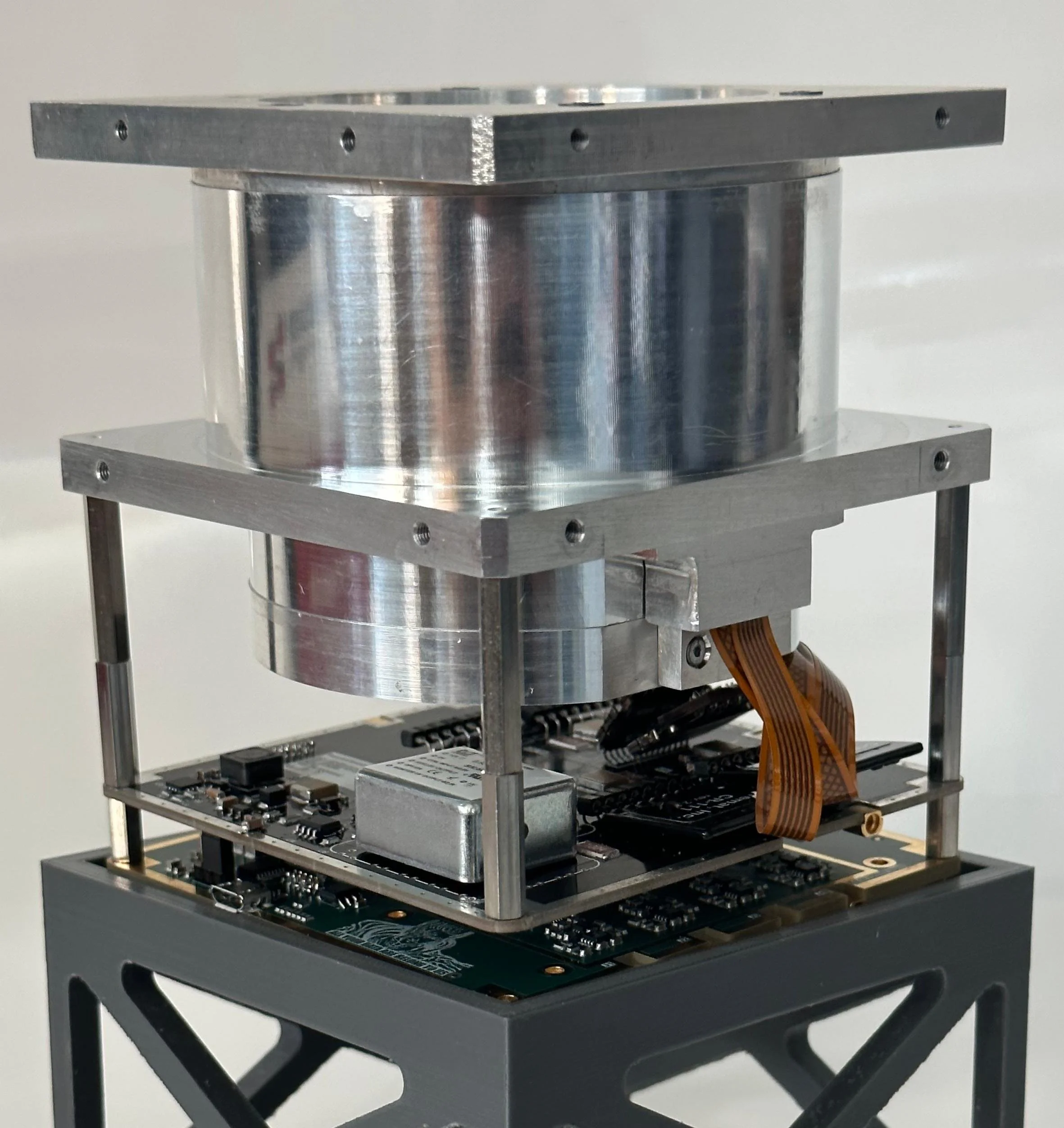
PRESET
The second satellite mission from the McMaster Space Technology Research Initiative (MSTRI) being developed in collaboration with the Canadian Space Agency.
PRESET aims to measure the pitch angle density of electrons within the Van Allen Belts to improve understanding of how electron’s are removed from the Van Allen Belts and what effects the electrons have on the upper atmosphere.
Science Objectives
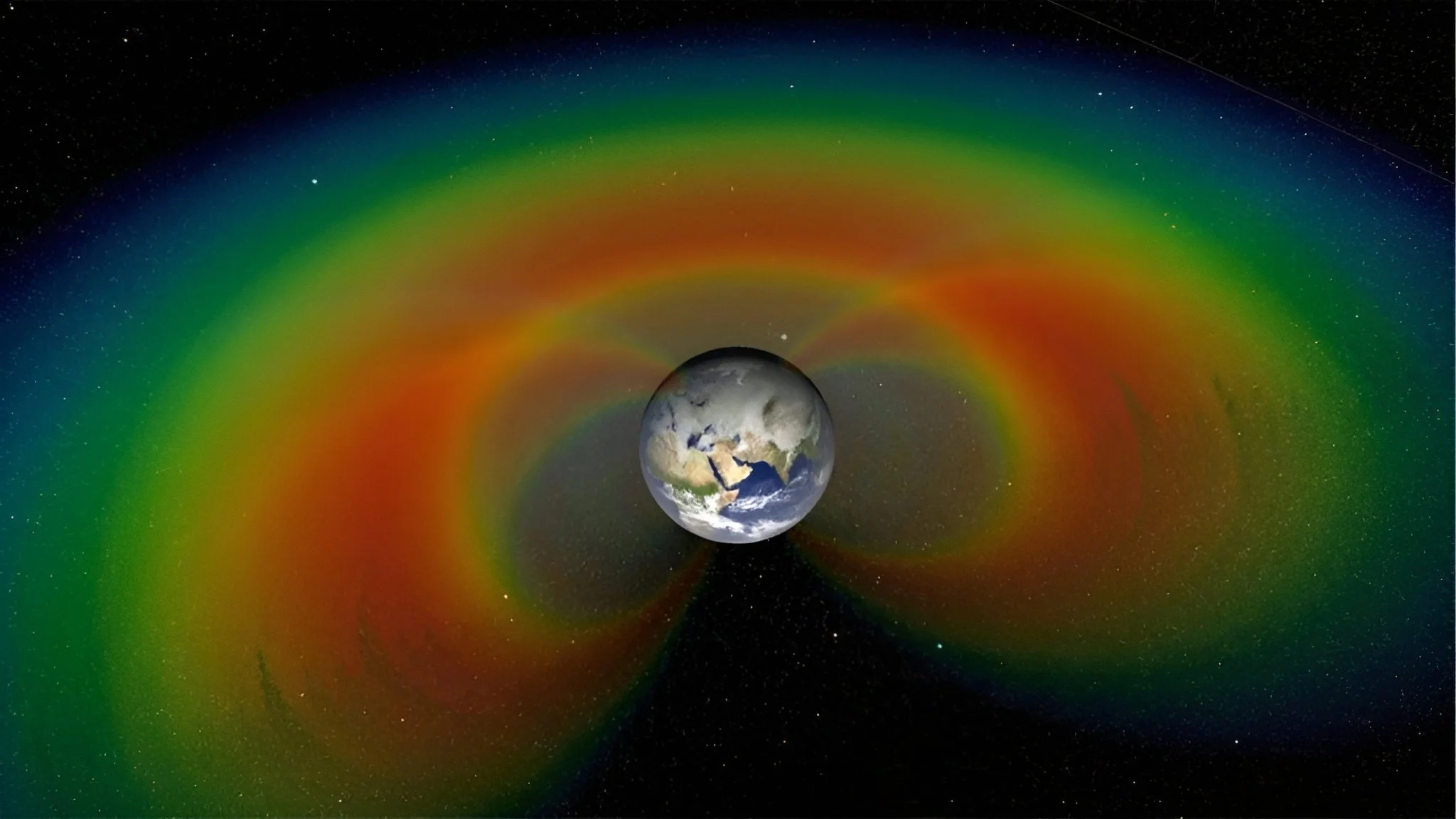
Research on the electron and proton spectra trapped with-in the Van Allen Belts has been a focal point for space research over the past decade. As understanding of the acceleration mechanisms that push particles away from the earth have been better understood, focus has turned to understanding the quantify and effects of energetic electrons and protons entering the Earth’s atmosphere. Of major interest is how these energetic particle precipitation events cause ozone depletion at the poles on the order of hours to days.
Particles that will enter Earth’s atmosphere can be identified by the angle between their velocity and the Earth’s magnetic field, called the pitch angle. By taking high angular resolution measurements of the Earth’s magnetic field and the direction electrons are traveling, the pitch angle and energy of electrons entering the atmosphere can be measured. By occupying a polar sun-synchronous orbit, the Pitch REsolving Spectrometry for Electron Transport (PRESET) mission will take high angular resolution measurements of the electron pitch-angle density near the north and south poles within the Van Allen Belts.
Image Credit: NASA Goddard Space Flight Center/Scientific Visualization Studio
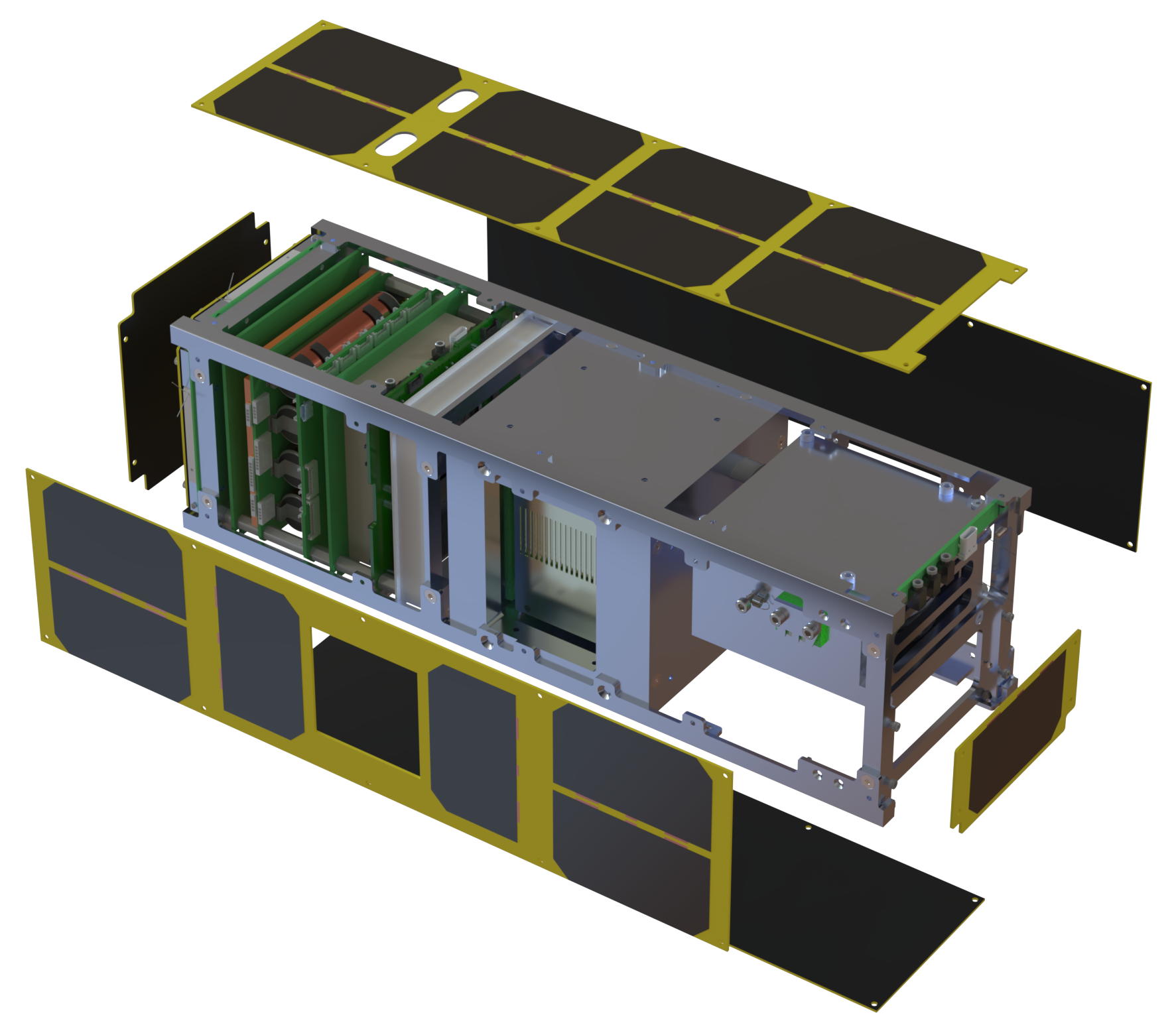
PRESET System Overview
CubeSat Specifications:
Configuration: 3-Unit CubeSat
Dimensions: 10 cm x 10 cm x 33 cm
Internal payload volume: 1.5U
Attitude Control System
Stabilization Method: Active magnetic stabilization
Components: 3-axis magnetorquer
Alignment Goals:
Detumble to a desired orientation
Spin in a Y-Thompson configuration for science collection
Maintian the spin axis orientation
Electrical Power System
Solar Array: Six body-mounted panels
EPS Module: NanoAvionics EPS1.0
Power Generation: 5-8W
Battery: 46 Wh
Communication System
Type: Custom UHF/VHF developed during NEUDOSE
Frequency: (Armature Bands)
Uplink: 2-m VHF Amateur Band, 145.97 MHz
Downlink: 70-cm UHF Amateur Band, 436.05 MHz
Antenna: Custom Deployable UHF/VHF Dipole System
Payloads
The Electron Spectrometer Telescope (EST)
Dimensions: 1U (10 cm x 10 cm x 10 cm)
Core Technology: Multi-pin-hole collimator & Silicon strip detectors
Energy Range: 200keV-5MeV
Energy Resolution: 30% dE/E
Angular Resolution: 6 degrees
Power Consumption: <3W @ 5V
Measurement Rate: Up to 30 degree sweep per second
The Magnetometer
Dimensions: 0.5U (10 cm x 10cm x 5 cm)
Core Technology: 3-axis Inboard and Outboard Anisotropic Magnetoresistive Sensor Heads
B-field Resolution: <1nT
Measurement Rate: up to 10Hz