
NEUDOSE Amateur Radio
Permanent Web Addresses
NEUDOSE’s permanent telemetry web address is http://telemetry.mcmasterneudose.ca/, which is re-directed to this page. This page will document all instructions on how to decode our packet structures and parse our telemetry packets.
NEUDOSE’s permanent dashboard web address is http://dashboard.mcmasterneudose.ca/, which is re-directed to this page. This page will document the satellite’s latest status while in orbit.
These permanent web addresses will be documented and sent to the Radio Amateurs of Canada (RAC), the Innovation Science and Economic Development Canada (ISED), the International Amateur Radio Union (IARU), and the International Telecommunication Union (ITU).
Planned Amateur Radio Frequencies
Uplink (Earth to NEUDOSE)
Function: Telecommand
Band: 2 m Very-High Frequency (VHF) Amateur Radio Band (144 — 146 MHz)
Carrier Frequency: 145.970 MHz
Bandwidth: 20 kHz
Emission Designator: 20K0F1DCN
Receiver Noise Temperature (Estimate): 204.1 Kelvin
Downlink (NEUDOSE to Earth)
Function: Beacon, Telemetry, and Scientific Data Transmission
Band: 70 cm Ultra-High Frequency (UHF) Amateur Radio Band (435 — 438 MHz)
Carrier Frequency: 436.050 MHz
Bandwidth: 25 kHz
Emission Designator: 25K0F1DCN
EIRP: 34.4 dBm

3D model of the UHF dipole antenna radiation pattern.
Radiation Patterns

Polar plot of the normalized directivity for the VHF dipole antenna radiation pattern.
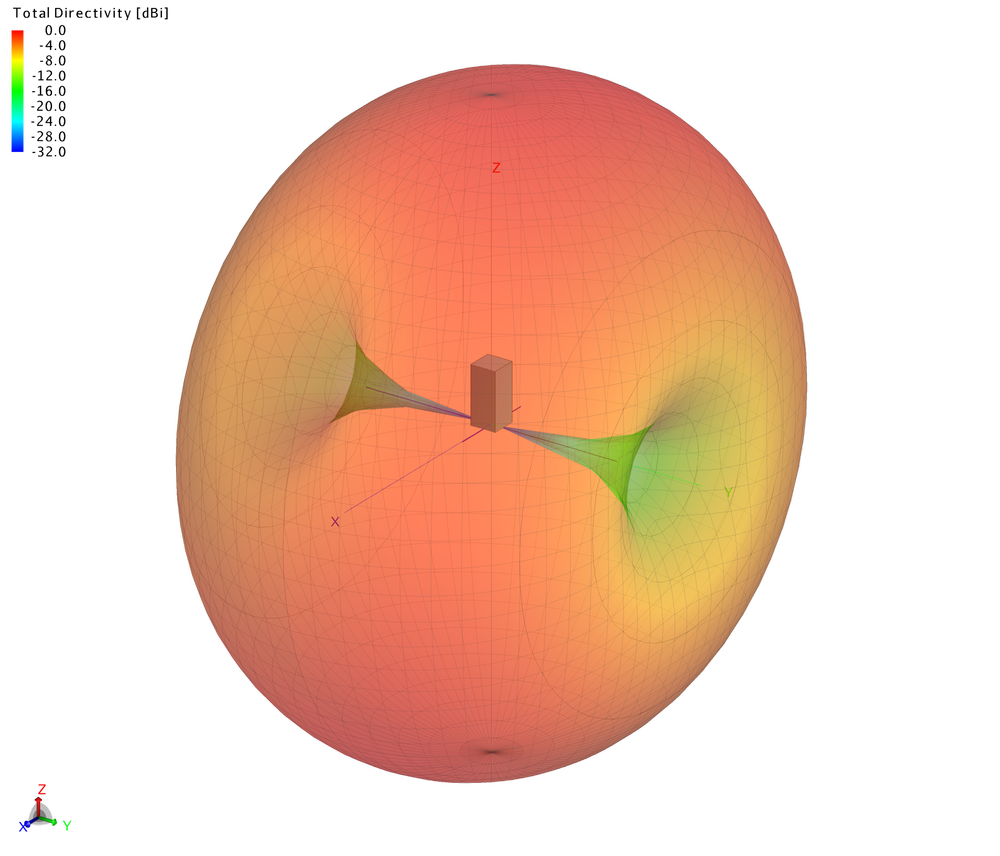
3D normalized directivity plot for the VHF dipole antenna radiation pattern.
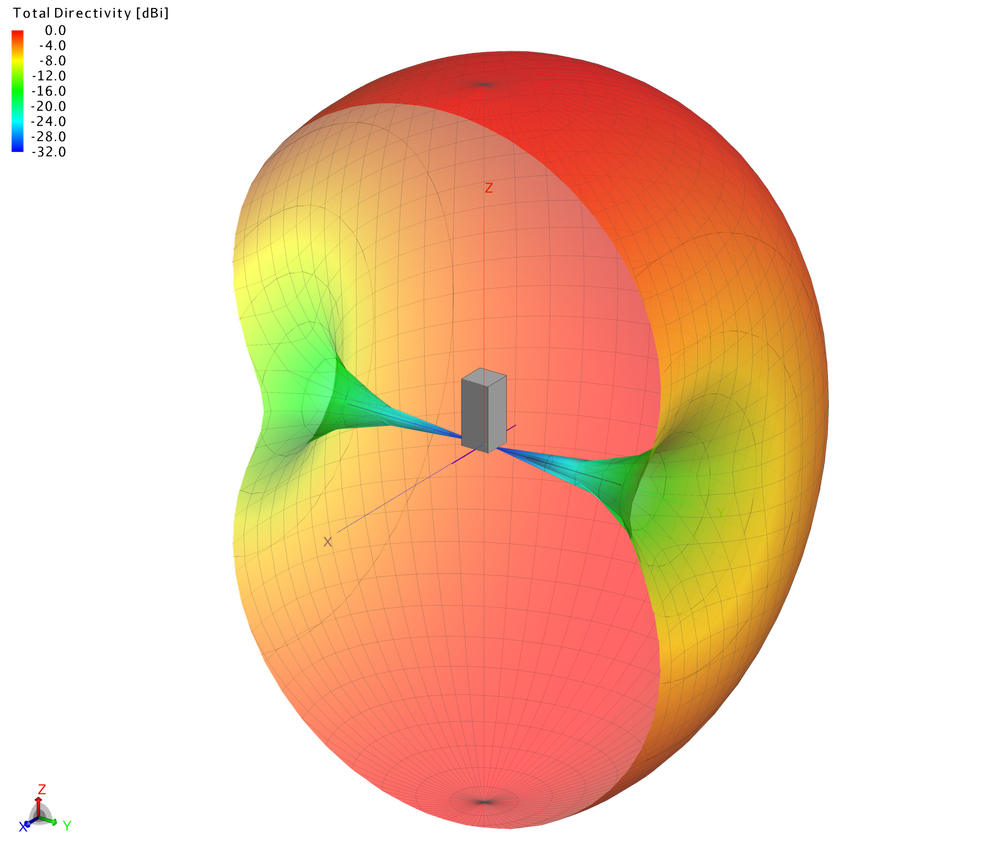
Cross-section of the 3D normalized directivity plot for the VHF dipole antenna radiation pattern.
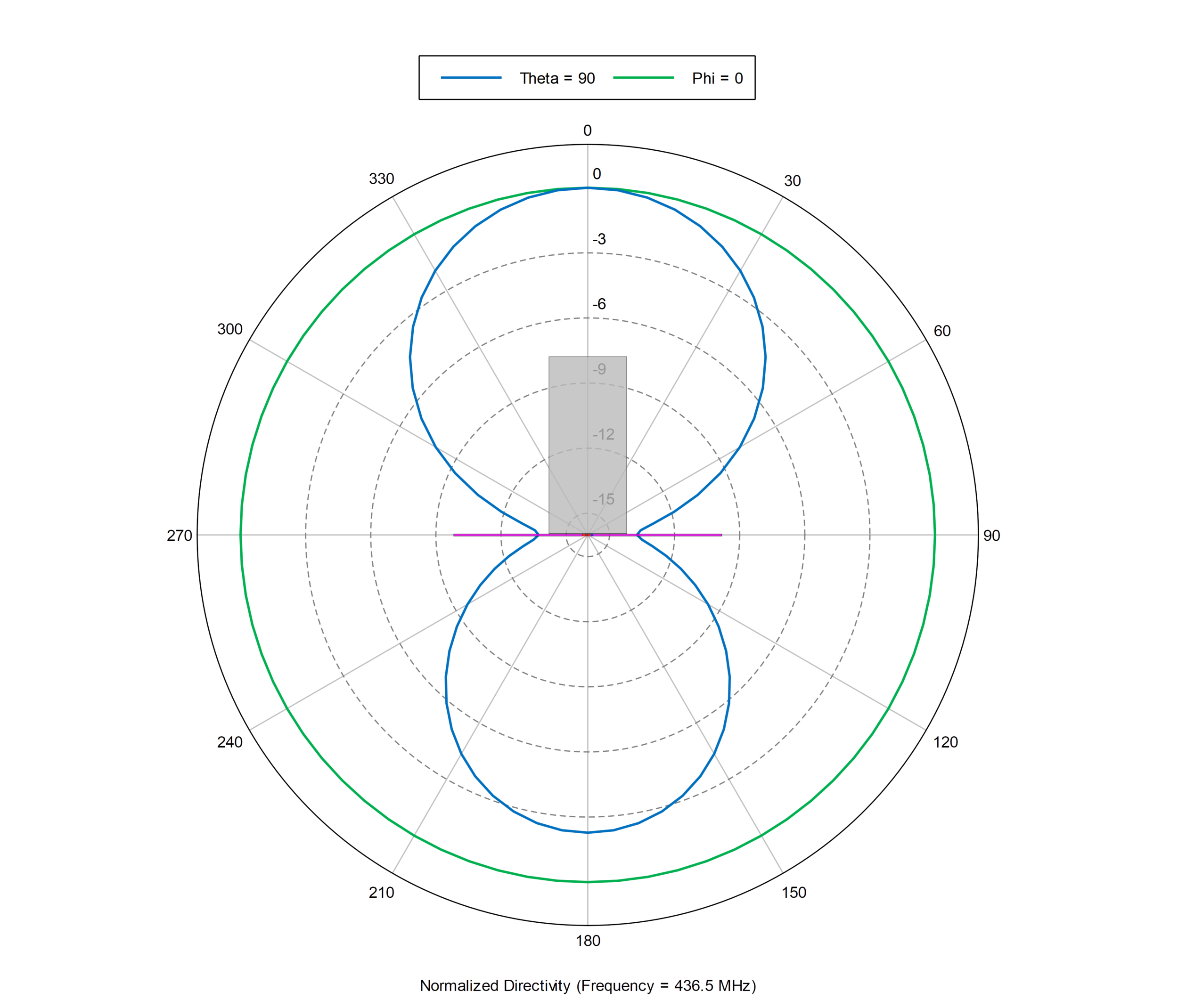
Polar plot of the normalized directivity for the UHF dipole antenna radiation pattern.

3D normalized directivity plot for the UHF dipole antenna radiation pattern.
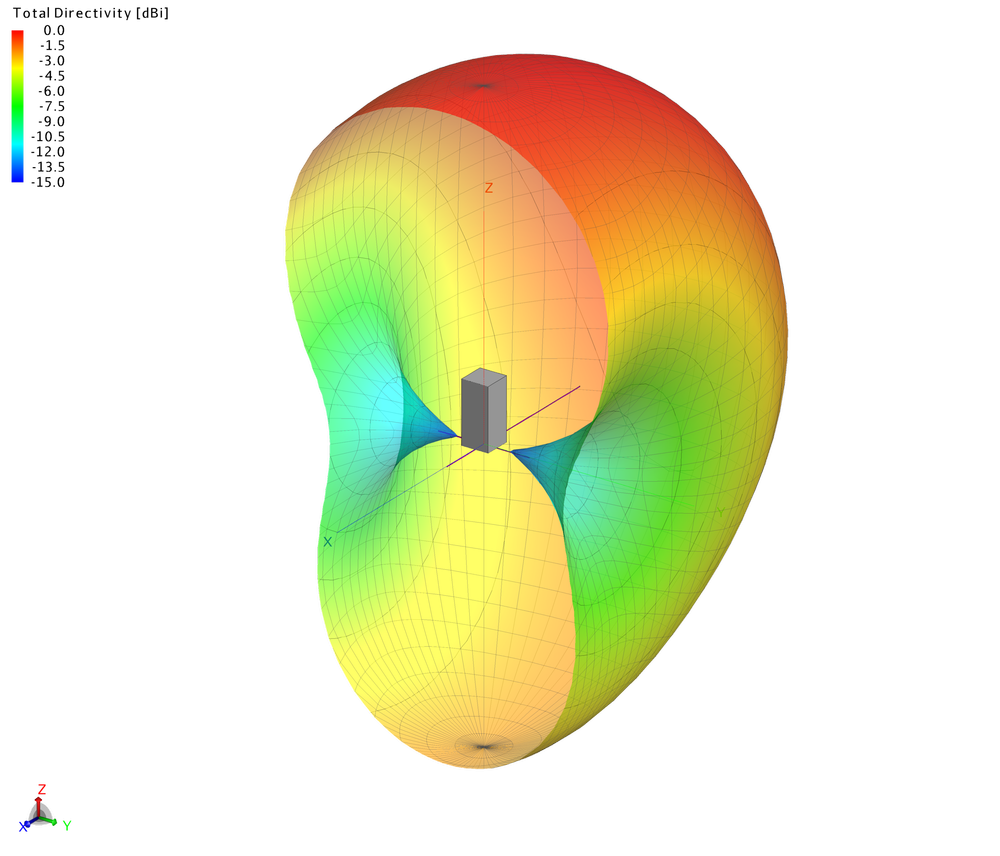
Cross-section of the 3D normalized directivity plot for the UHF dipole antenna radiation pattern.
Telemetry Decoding
One key contribution the NEUDOSE team is currently making to the amateur community is a collaboration with the GNU Radio GitHub group called gr-satellites. Gr-satellites is a repository run by Dr. Daniel Estévez and is an open-sourced collection of telemetry decoders for all the satellites that transmit on amateur radio bands. GNU Radio is a free and open-sourced radio ecosystem designed to provide a development toolkit for signal processing blocks to implement a software radio. This software uses the latest software-defined radios (SDRs) to enable fast and easy access to the radio spectrum. The team is currently working with the group to implement our software signal processing into their out-of-tree modules and has posted an announcement to the group. These modules will make our signal processing blocks publicly available. Amateurs worldwide can easily follow the installation guide and set up their SDRs to receive our telemetry packets.
More information regarding packet structures, instructions, codes, and parsing scripts will be made available here.
Link Budget: neudose_system_linkbudget_2020_07_18.xlsx*
*The link budgets were developed from Jan King’s template, AMSAT-IARU_Link_Model_Rev2.5.5.xls, located on the AMSAT UK webpage